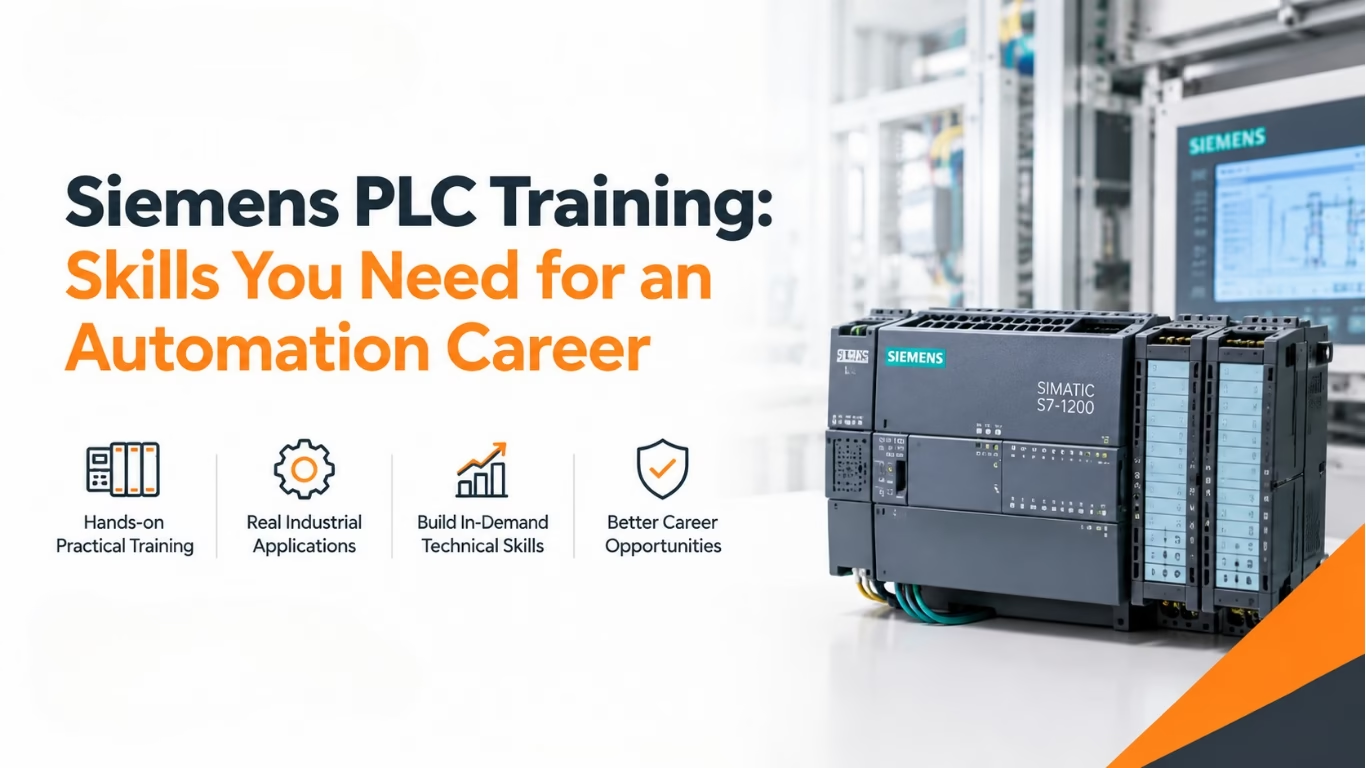
Siemens PLC Training: Skills You Need for an Automation Career
Automation spans several distinct fields, and the required skill set depends heavily on an individual’s specific track. The industry is generally divided into three primary domains: Industrial & Hardware Automation, Software & IT/DevOps Automation, and Industrial Robotics & Control. Automation focuses on physical hardware, manufacturing lines, microcontrollers, and dynamic systems.
One of the best places to start learning automation is with PLC programming. In the current era of industrial automation, the fundamental controller is the Programmable Logic Controller (PLC). A PLC is the brain of the factory floor. Unlike standard computers, PLCs are built to survive harsh industrial environments and execute real-time logic cycles without crashing. It is programmed using languages such as Ladder Logic or Function Block Diagram. To build a functional machine control loop, a PLC works alongside essential hardware and software partners like VFDs, HMIs and SCADA systems.
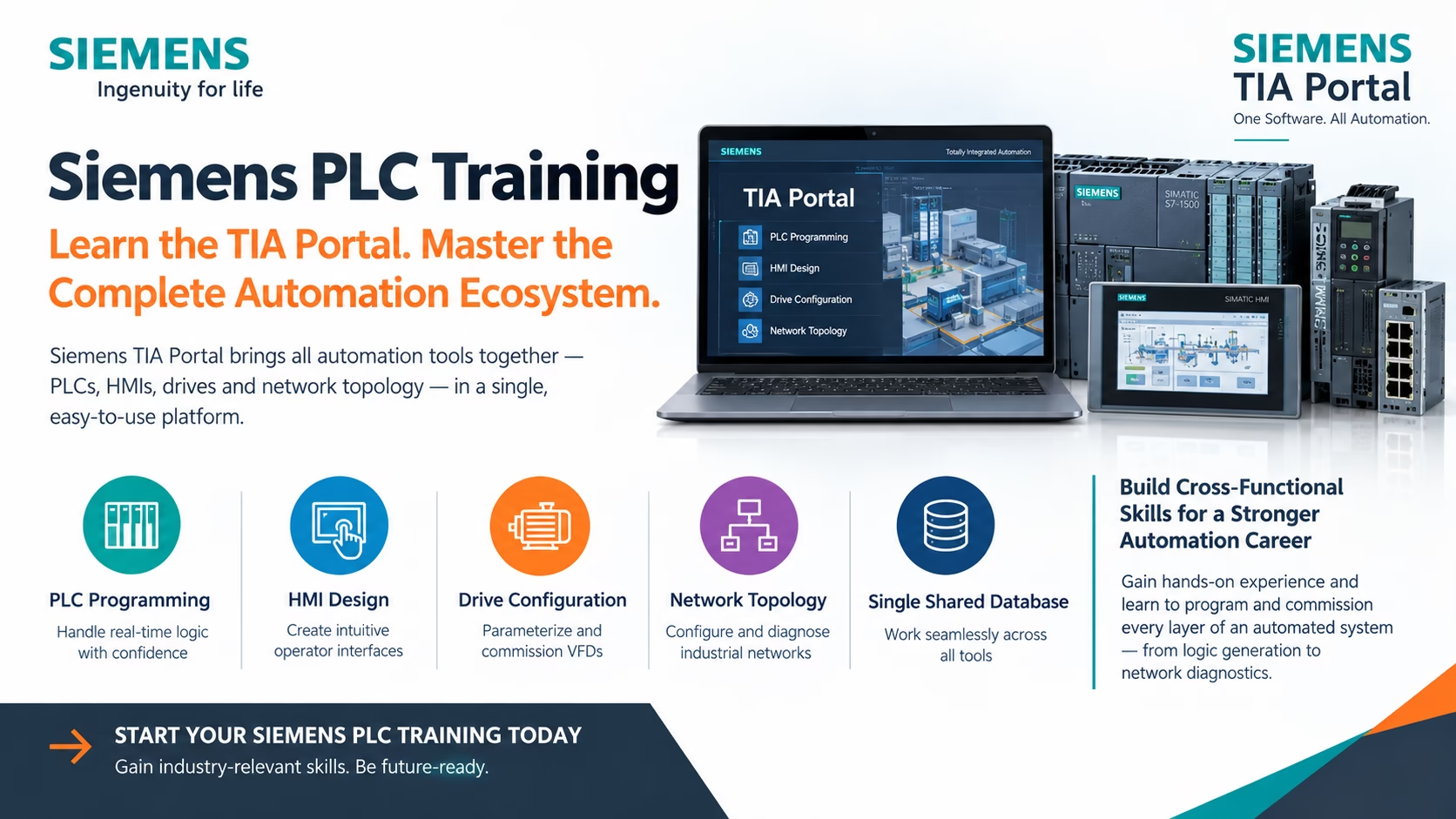
Siemens, one of the largest industrial manufacturing and engineering companies, focuses heavily on industrial automation, building infrastructure, and digital transformation. It operates in nearly every country worldwide. Siemens PLC programming is performed using their software, the TIA Portal.Traditionally, engineers had to use separate software environments to program PLCs, design touchscreens, parameterize motor drives, and configure network topologies. Siemens streamlined this process through the TIA Portal. Instead of using individual software packages for PLCs, HMIs, drives, and network topology, the TIA Portal integrates all tools into a single shared database. The software is relatively beginner-friendly and serves as an excellent starting point for anyone looking to begin their PLC training. Therefore, a Siemens PLC training course can easily include programming for all the different automation tools. Rather than learning tools in isolation, a comprehensive Siemens PLC training program simultaneously teaches you how to program and commission every layer of an automated system. Due to its central position in industrial engineering, a comprehensive Siemens PLC training course equips engineers with cross-functional competencies spanning logic generation, drive commissioning, and network diagnostic design.
In addition to technical skills, analytical abilities are also crucial in automation. Systematic troubleshooting and root cause analysis are essential skills for an automation engineer. Since automation systems can fail in ambiguous ways, the ability to isolate errors across hardware, software, network, and logic layers is vital. Automation engineers must be able to map out manual workflows step-by-step and identify edge cases, bottlenecks, or failure modes before writing code. They should also be capable of translating complex technical designs into functional specifications for business analysts, operations teams, or management. Currently, Siemens is a dominant market leader in industrial Programmable logic controllers (PLCs), Human-Machine Interfaces (HMIs), and Supervisory Control and Data Acquisition (SCADA) systems used in manufacturing worldwide.
If you’re looking to jumpstart a career in industrial engineering, starting with a hands-on Siemens PLC course gives you direct exposure to industry-standard hardware and software workflows. Combine that software training with a solid troubleshooting mindset, and you’ll be well-equipped to design, debug, and maintain the automated systems running modern industry today.